Connected: The Surprising Power of Our Social Networks and How They Shape Our Lives
Continue reading
Connected: The Surprising Power of Our Social Networks and How They Shape Our Lives
Continue reading
The “last mile” is a term used in the telecommunications industry that refers to delivering connectivity to the customers that will actually be using the system. In the sense of Graph Databases, it refers to how well the end user can extract value and insight from the graph. We’ve already seen an example of this concept with Graph Search, allowing a user to express their requests in natural language. Today we’ll see another example. We’ll be taking advantage of the features of Neo4j 2.0 to make this work, so be sure to have read the previous post on the matter.
We’re going to be using VisualSearch.js made by Samuel Clay of NewsBlur. VisualSearch.js enhances ordinary search boxes with the ability to autocomplete faceted search queries. It is quite easy to customize and there is an annotated walkthrough of the options available. You can see what it does in the image below, or click it to try their demo.
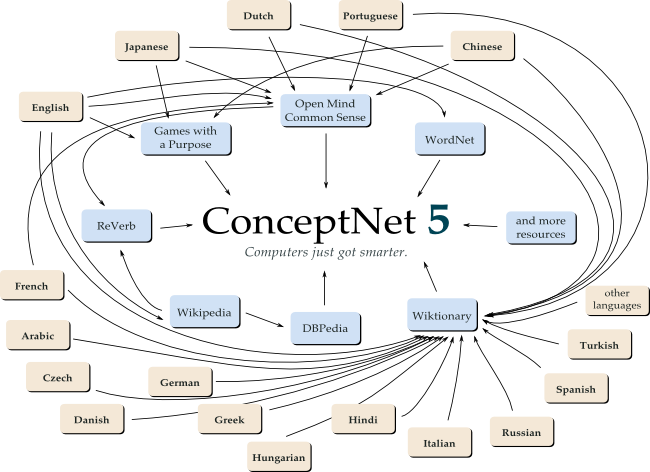
From the second we are born we are collecting a wealth of knowledge about the world. This knowledge is accumulated and interrelated inside our brains and it represents what we know. If we could export this knowledge and give it to a computer, it would look like ConceptNet. ConceptNet is a semantic network that…
…is built from nodes representing concepts, in the form of words or short phrases of natural language, and labeled relationships between them. These are the kinds of things computers need to know to search for information better, answer questions, and understand people’s goals.
There are multiple ways to setup a Neo4j Cluster on Amazon Web Services (AWS) and I want to show you one way to do it.
Overview:
We’ll start off by logging on to Amazon Web Services and creating a Virtual Private Cloud:
NeoTechnology was featured on TechCrunch after raising a Series B round, and it has an entry on CrunchBase. If you look at CrunchBase closely you’ll notice it’s a graph. Who invested in what, who co-invested, what are the common investment themes between investors, how are companies connected by board members, etc. These are questions we can ask of the graph and are well suited for graph databases.
Continue reading
Allison Sparrow shared a link to Patentula, a company interested in finding better ways to explore patent data and hunt patent trolls. What caught my attention is this quote from the video below:
What we tried to do with it, is bypass any sort of keyword processing in order to find similar patents. The reason we’ve done this is to avoid the problems encountered by other systems that rely on natural language processing or semantic analysis simply because patents are built to avoid detection by similar keywords…we use network topology (specifically citation network topology) to mine the US patent database in order to predict similar documents.
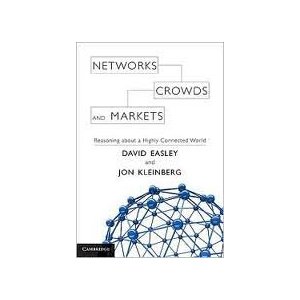
I’ve had “Networks, Crowds, and Markets: Reasoning About a Highly Connected World” by David Easley and Jon Kleinberg on my bookshelf for a few months now, and a conversation with a client reminded me that I hadn’t finished reading it (barely started really). It is available from Cambridge University Press, but also on the web and in PDF format.
Continue reading

Some relationships change over time. Think about your friends from high school, college, work, the city you used to live in, the ones that liked you ex- better, etc. When exploring a social network it is important that we understand not only the strength of the relationship now, but over time. We can use communication between people as a measure.
I ran into a visualization that explored how multiple parties where connected by communications in multiple projects. We’re going to reuse it to explore how multiple people interact with each other. So let’s make a network of 50 friends and connect them to each other multiple times. Think of it as people writing on your facebook wall.
Continue reading
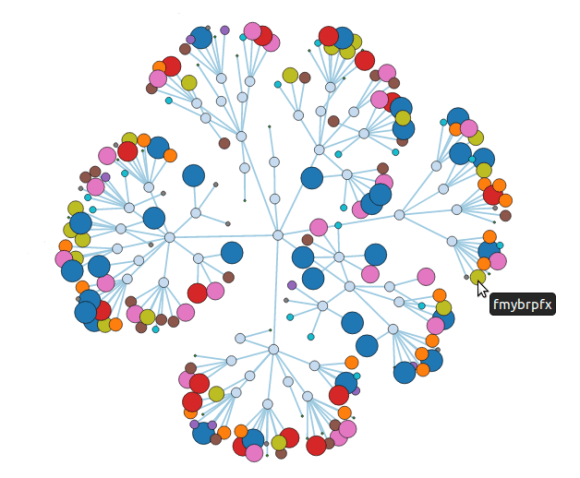
We’ve seen some pretty nice visualizations of nodes and their immediate neighbors, but we want to be able to visualize more. So we’re going to prepare a 200 node network, use Cypher to extract the data we want and visualize it with D3.js.
Continue reading


 Max De Marzi