Our own Multi-Model Database – Part 3

shitty3

If you haven’t read part 1 and part 2 then do that first or you’ll have no clue what I’m doing, and I’d like to be the only one not knowing what I’m doing.

We’ve built the beginnings of this database but so far it’s just a library and for it to be a proper database we need to be able to talk to it. Following the Neo4j footsteps, we will wrap a web server around our database and see how it performs.

There are a ton of Java based frameworks and micro-frameworks out there. Not as bad as the Javascript folks, but that still leaves us with a lot of choices. So as any developer would do I turn to benchmarks done by other people of stuff that doesn’t apply to me, and you won’t believe what I found –scratch that, yes you will, I got benchmarks.
Continue reading →

Tagged , , , , , , ,

OUR OWN MULTI-MODEL DATABASE – PART 2

shitty2

If you haven’t read part 1 then do that first or this won’t make sense, well nothing makes sense but this specially won’t.

So before going much further I decided to benchmark our new database and found that our addNode speed is phenomenal, but it was taking forever to create relationships. See some JMH benchmarks below:

Benchmark                                                           Mode  Cnt     Score     Error  Units
ChronicleGraphBenchmark.measureCreateEmptyNodes                    thrpt   10  1548.235 ± 556.615  ops/s
ChronicleGraphBenchmark.measureCreateEmptyNodesAndRelationships    thrpt   10     0.165 ±   0.007  ops/s

Each time I was creating 1000 users, so this test shows us we can create over a million empty nodes in one second. Yeah ChronicleMap is damn fast. But then when I tried to create 100 relationships for each user (100,000 total) it was taking forever (about 6 seconds). So I opened up YourKit and you won’t believe what I found out next (come on that’s some good clickbait).
Continue reading →

Tagged , , , , , , ,

Our own Multi-Model Database – Part 1

shittydb

I may be remembering this wrong, but I think it was Henry Rollins who once asked, “What came first, the shitty Multi-Model Databases or the Drugs?” His confusion was over whether:

A) there were a bunch of developers dicking around with their Mac laptops and they wrote a shitty database, put it on github, posted on hacker news, and then other developers who were on drugs started using it or…

B) there were a bunch of developers on ketamine and ecstasy and somebody said lets write a shitty database

I think “A” is what probably happens and how we end up with over 300 databases on DB Engines. But what about “B” ? Well I don’t have any good stuff lying around, but I did hurt my foot the other day and the doctors gave me some Tramadol, so lets down some of that and see what happens.
Continue reading →

Tagged , , , , , , , ,

Connected

connected

The Stereo MC’s song “Connected” could be about some recently gained insight and the realization that maybe some of the people you held dear are phonies and while the reality of the situation is scary, you cannot allow yourself to turn a blind eye anymore or allow yourself to backslide by disconnecting from the real world.

Or it could be a warning about how we’ve all been blinded by SQL databases for too long and we must instead look to connect our data with Graph Databases. About how those new connections may be scary (like because of fraud detection) but they are necessary to better understand reality.

Either way, we may want to see if two nodes in Neo4j are connected and I’m going to show you how to do that faster.
Continue reading →

Tagged , , , , , , , , ,

Enabling Legacy Automatic Full Text Search on Neo4j 3.x

solar-elastic-lucene

Neo4j 3.x has made inroads toward Full Text Search capabilities using Cypher keywords “STARTS WITH”, “ENDS WITH” and “CONTAINS”. However this search capability is limited to a single Schema Index and can be a problem when you need a very flexible search interface. To search across multiple models you can do this trick:
Continue reading →

Tagged , , , , ,

News Feeds

Ron Burgundy Gets Hungry

Ron Burgundy (in Anchorman) gets Hungry

The “News Feed” is a core feature of social networks like Twitter, Facebook, or Vine (RIP). Let’s take a look at how we could model and implement this in Neo4j. Our social network needs Users (otherwise it would be kinda empty) that FOLLOW each other (otherwise it would not be very social). Those users need to POST some Messages (otherwise it would be boring). Here is our first attempt at a model (using Arrows):
Continue reading →

Tagged , , , , , , ,

Catalogs and Hierarchies

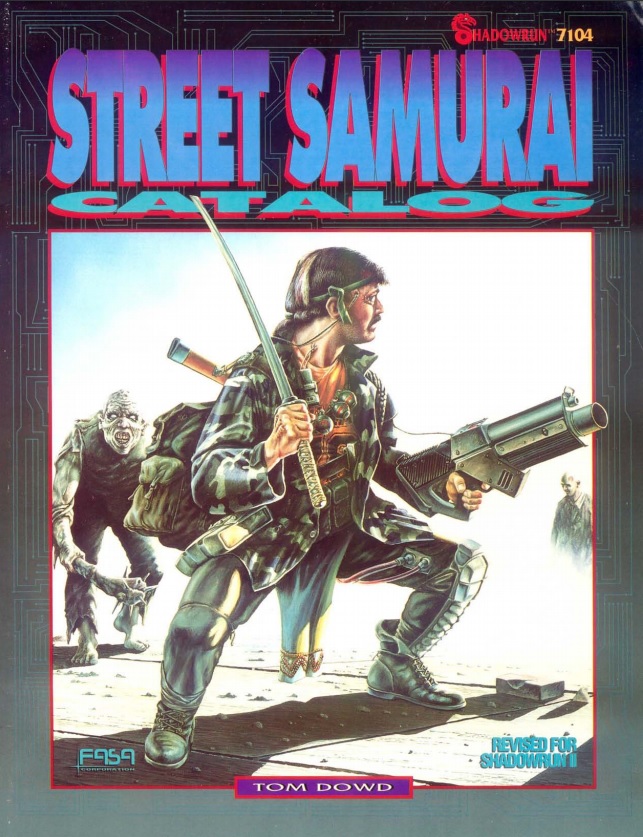
street-samurai-catalog-large

When I was younger, friends and I would play a role playing game called “Shadowrun“. The game draws elements from science fiction, crime dramas, and magic and blends them all together to make a fun mess. You could be a Dwarf Shaman, an Elf Decker, a Human Rigger, an Orc Adept, a Troll Street Samurai or whatever combination your heart desired. Choosing a gender, race and archetype was just the beginning a more important question: “What is your character going to wear and take on missions?”
Continue reading →

Tagged , , , , , , , ,

Delivering a Graph Based Search solution to slightly wrong data

oops

When it comes to databases, having good clean data is always important. More so with Graphs which deal with concepts as nodes and their relationships between them. Inevitably, you will run into messy data and have to deal with it. In a lot of the projects our customers work on they are dealing with connecting multiple data sources to get to a “golden record” or single source of truth. A lofty goal, sometimes impossible to achieve, but we can use the relationships of the data to help us come close.

One option is to extract the features (or tags) of a composite object and see if any other object shares most of these features. If that is the case then they are possibly the same object and should be merged instead of creating a new record. A partial subgraph match is something akin to a recommendation engine in Neo4j and pretty trivial to write. Take a look back at a few old blog posts for ideas.
Continue reading →

Tagged , , , , , , , , , ,

Custom Importers

imports

When it comes to getting data into Neo4j, you have a ton of options. You can use LOAD CSV from Cypher, you can use the Import Tool, you can use the JDBC connector in APOC, and possibly a few more options I’m forgetting. Some of these require the data to be in a specific format, others that you write a little custom cypher. These work very well most of the time, but sometimes you run into data in weird shapes and coming in from vendors who aren’t willing to change just for you. What do you do in that case? Well, you write a custom importer. I’m going to show you how by importing the Cities database from MaxMind.
Continue reading →

Tagged , , , , ,

Speeding up Traversals

roots

A few folks have come to us recently with the need to trace lineages of nodes of variable depth many hops away. You can run into this need if you are looking at the ancestries of living things, tracing data as it flows through an ETL, large network connectivity maps, etc. These types of queries tend to be murder on relational databases because of the massive recursive joins they have to deal with. Let’s give them a try in Neo4j.
Continue reading →

Tagged , , , , ,