Tag Archives: relationship graph

Connected

connected

The Stereo MC’s song “Connected” could be about some recently gained insight and the realization that maybe some of the people you held dear are phonies and while the reality of the situation is scary, you cannot allow yourself to turn a blind eye anymore or allow yourself to backslide by disconnecting from the real world.

Or it could be a warning about how we’ve all been blinded by SQL databases for too long and we must instead look to connect our data with Graph Databases. About how those new connections may be scary (like because of fraud detection) but they are necessary to better understand reality.

Either way, we may want to see if two nodes in Neo4j are connected and I’m going to show you how to do that faster.
Continue reading

Tagged , , , , , , , , ,

News Feeds

Ron Burgundy Gets Hungry

Ron Burgundy (in Anchorman) gets Hungry

The “News Feed” is a core feature of social networks like Twitter, Facebook, or Vine (RIP). Let’s take a look at how we could model and implement this in Neo4j. Our social network needs Users (otherwise it would be kinda empty) that FOLLOW each other (otherwise it would not be very social). Those users need to POST some Messages (otherwise it would be boring). Here is our first attempt at a model (using Arrows):
Continue reading

Tagged , , , , , , ,

Catalogs and Hierarchies

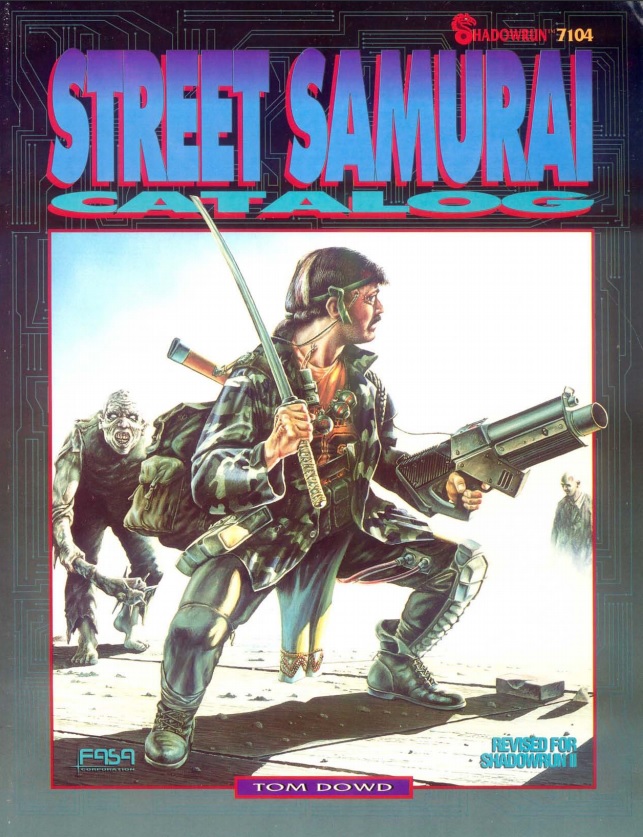
street-samurai-catalog-large

When I was younger, friends and I would play a role playing game called “Shadowrun“. The game draws elements from science fiction, crime dramas, and magic and blends them all together to make a fun mess. You could be a Dwarf Shaman, an Elf Decker, a Human Rigger, an Orc Adept, a Troll Street Samurai or whatever combination your heart desired. Choosing a gender, race and archetype was just the beginning a more important question: “What is your character going to wear and take on missions?”
Continue reading

Tagged , , , , , , , ,

Delivering a Graph Based Search solution to slightly wrong data

oops

When it comes to databases, having good clean data is always important. More so with Graphs which deal with concepts as nodes and their relationships between them. Inevitably, you will run into messy data and have to deal with it. In a lot of the projects our customers work on they are dealing with connecting multiple data sources to get to a “golden record” or single source of truth. A lofty goal, sometimes impossible to achieve, but we can use the relationships of the data to help us come close.

One option is to extract the features (or tags) of a composite object and see if any other object shares most of these features. If that is the case then they are possibly the same object and should be merged instead of creating a new record. A partial subgraph match is something akin to a recommendation engine in Neo4j and pretty trivial to write. Take a look back at a few old blog posts for ideas.
Continue reading

Tagged , , , , , , , , , ,

Importing the Hacker News Interest Graph

HackerNews-799e9e47

Graphs are everywhere. Think about the computer networks that allow you to read this sentence, the road or train networks that get you to work, the social network that surrounds you and the interest graph that holds your attention. Everywhere you look, graphs. If you manage to look somewhere and you don’t see a graph, then you may be looking at an opportunity to build one. Today we are going to do just that. We are going to make use of the new Neo4j Import tool to build a graph of the things that interest Hacker News.
Continue reading

Tagged , , , , , , , , , , , ,

Triggers in Neo4j

al-capones-gun

One of the often overlooked features in Neo4j is the “TransactionEventHandler” capabilities… better known in the database world as “Triggers“. When a transaction occurs, we can analyze that event and decide to take some action. To accomplish this, we’ll write a “Kernel Extension” ( a little different from the Unmanaged Extensions we’ve seen on this blog ) to tie in our trigger.

Continue reading

Tagged , , , , , ,

Scaling Concurrent Writes in Neo4j

concurrent writes

A while ago, I showed you a way to scale Neo4j writes using RabbitMQ. Which was kinda cool, but some of you asked me for a different solution that didn’t involve adding yet another software component to the stack.

Turns out we can do this in just Neo4j using a little help from the Guava library. The solution involved a background service running that holds the writes in a queue, and every once in a while (like say every second) commits those writes in one transaction.
Continue reading

Tagged , , , , , , , ,

Translating Cypher To Neo4j Java API 2.0

cypher-translate-2.0ish600x293

About 6 months ago we looked at how to translate a few lines of Cypher in to way too much Java code in version 1.9.x. Since then Cypher has changed and I suck a little less at Java, so I wanted to share a few different ways to translate one into the other just in case you stuck in a mid-eighties time warp and are paid by the number of lines of code you write per hour.

But first, lemme take a #Selfie let’s make some data. Michael Hunger has a series of blog posts on getting and creating data in Neo4j, we’ll steal borrow his ideas. Let’s create 100k nodes:

WITH ["Jennifer","Michelle","Tanya","Julie","Christie","Sophie","Amanda","Khloe","Sarah","Kaylee"] AS names 
FOREACH (r IN range(0,100000) | CREATE (:User {username:names[r % size(names)]+r}))

Continue reading

Tagged , , , , , , , , , , ,

Translating Cypher to Java

cypher-translate-600x293

The expressive power of Cypher is already awesome and getting better with the Neo4j 2.0 release. Let’s take a step back from the bleeding edge and see Cypher in 1.9.4 and how it can be translated into Java. First a simple example where we look up a User node by an index and return a list of usernames belonging to the people who are that user’s friends:

START me = node:Users(username='maxdemarzi')
MATCH me -[:FRIENDS]-> people
RETURN people.username

The Cypher statement expresses what I want even better than my botched explanation in English. So how would we do this in the Neo4j Java API?
Continue reading

Tagged , , , , ,

Permission Resolution with Neo4j – Part 1

i_can_haz_permissions

People produce a lot of content. Messages, text files, spreadsheets, presentations, reports, financials, etc, the list goes on. Usually organizations want to have a repository of all this content centralized somewhere (just in case a laptop breaks, gets lost or stolen for example). This leads to some kind of grouping and permission structure. You don’t want employees seeing each other’s HR records, unless they work for HR, same for Payroll, or unreleased quarterly numbers, etc. As this data grows it no longer becomes easy to simply navigate and a search engine is required to make sense of it all.

But what if your search engine returns 1000 results for a query and the user doing the search is supposed to only have access to see 4 things? How do you handle this? Check the user permissions on each file realtime? Slow. Pre-calculate all document permissions for a user on login? Slow and what if new documents are created or permissions change between logins? Does the system scale at 1M documents, 10M documents, 100M documents?
Continue reading

Tagged , , , , ,