Tag Archives: software

Bidirectional Traversals in Space

firefly

If you have never watched Firefly, then stop whatever you are doing and get to it, you can come back and read this post later. Ok good, now where were we. Firefly. The series is set a few hundred years from now, after people begin to terraform a new star system and it follows the adventures of the renegade crew of Serenity, a “Firefly-class” spaceship whose work consists of cargo runs or smuggling while failing to stay out of trouble. There is no faster than light travel in this series, so ships can’t just “warp” where ever they want. Instead they travel about from planets and moons, exchanging cargo, refueling and trying to make a living. We are going to model “The Verse” of Firefly in Neo4j, and see how we can find routes to move our illicit cargo from one place to another.
Continue reading


Tagged , , , , , , , , ,

Flight Search with the Neo4j Traversal API

Screen Shot 2015-08-30 at 2.21.07 AM

Before Cypher came along, if you wanted to describe a graph traversal in Neo4j you would use the Traversal Framework Java API. The Traversal API is one of the many hidden gems of Neo4j and today we are going to take a closer look at it. Traversing a graph is about going on a journey. All journeys have a starting point (or points) so that’s the first thing we have to do, figure out where in the graph we begin. It can be a single node, or multiple ones, but they will go on the journey following the same rules, so its easier if it’s just one node or nodes of the same “type”.
Continue reading

Tagged , , , , , , , , ,

Importing the Hacker News Interest Graph

HackerNews-799e9e47

Graphs are everywhere. Think about the computer networks that allow you to read this sentence, the road or train networks that get you to work, the social network that surrounds you and the interest graph that holds your attention. Everywhere you look, graphs. If you manage to look somewhere and you don’t see a graph, then you may be looking at an opportunity to build one. Today we are going to do just that. We are going to make use of the new Neo4j Import tool to build a graph of the things that interest Hacker News.
Continue reading

Tagged , , , , , , , , , , , ,

One Direction Relationships in Neo4j

onedirectionchop

In the Neo4j Property Graph model, every single Relationship must be Typed and Directed. This means they must have a specific name (FRIENDS, LIKES, FOLLOWS, etc) and have a Start Node and an End Node to show direction. What’s neat is that when you write your queries you can choose to ignore that. The following queries are all valid:

// Get all the people I follow 
MATCH (u1:Person)-[:FOLLOWS]->(u2:Person)
WHERE u1.username = "maxdemarzi"
RETURN u2.username

// Get all the people that I follow or follow me
MATCH (u1:Person)-[:FOLLOWS]-(u2:Person)
WHERE u1.username = "maxdemarzi"
RETURN u2.username

// Get all the people related to me 
MATCH (u1:Person)--(u2:Person)
WHERE u1.username = "maxdemarzi"
RETURN u2.username

Continue reading

Tagged , , , , ,

Giving Neo4j 2.2 a Workout

rhino_running

Neo4j 2.2 is getting released any day now, so let’s put the Release Candidate through its paces with Gatling. Once we download and start it up, you’ll notice it wants us to authenticate.
Continue reading

Tagged , , , , , , , ,

Translating Cypher To Neo4j Java API 2.0

cypher-translate-2.0ish600x293

About 6 months ago we looked at how to translate a few lines of Cypher in to way too much Java code in version 1.9.x. Since then Cypher has changed and I suck a little less at Java, so I wanted to share a few different ways to translate one into the other just in case you stuck in a mid-eighties time warp and are paid by the number of lines of code you write per hour.

But first, lemme take a #Selfie let’s make some data. Michael Hunger has a series of blog posts on getting and creating data in Neo4j, we’ll steal borrow his ideas. Let’s create 100k nodes:

WITH ["Jennifer","Michelle","Tanya","Julie","Christie","Sophie","Amanda","Khloe","Sarah","Kaylee"] AS names 
FOREACH (r IN range(0,100000) | CREATE (:User {username:names[r % size(names)]+r}))

Continue reading

Tagged , , , , , , , , , , ,

Neo4j all the way Down!

ext_inside_server_inside_embedded

Just because you can, doesn’t mean you should. However sometimes it can be comforting to know how. I am going to show you how to run Neo4j Embedded and Neo4j Server at the same time…and an Unmanaged Extension inside that Neo4j Server. There aren’t any real good reasons why you’d want to do this, but it’s April Fools, so here we go.

Continue reading

Tagged , , , , ,

It’s over 9000! Neo4j on WebSockets

it__s_over_9000_

In the last blog post we managed to run Neo4j at Ludicrous Speed over http using Undertow and get to about 8000 requests per second. If we needed more speed we can scale up the server or we can scale out to multiple servers by switching out the GraphDatabaseFactory and using the HighlyAvailableGraphDatabaseFactory class instead in Neo4j Enterprise Edition.

But can we go faster on a single server without new hardware? Well… yes, if we’re willing to drop http and switch to Web Sockets.

Continue reading

Tagged , , , , , , , ,

Scaling Writes

scaling_writes

Most of the applications using Neo4j are read heavy and scale by getting more powerful servers or adding additional instances to the HA cluster. Writes however can be a little bit tricker. Before embarking on any of the following strategies it is best that the server is tuned. See the Linux Performance Guide for details. One strategy we’ve seen already is splitting the reads and writes to the cluster, so the writes only go to the Master. The brave can even change the push factor to zero and set a pull interval only in neo4j/conf/neo4j.properties:
Continue reading

Tagged , , , , ,

Knowledge Bases in Neo4j

cnet5promo

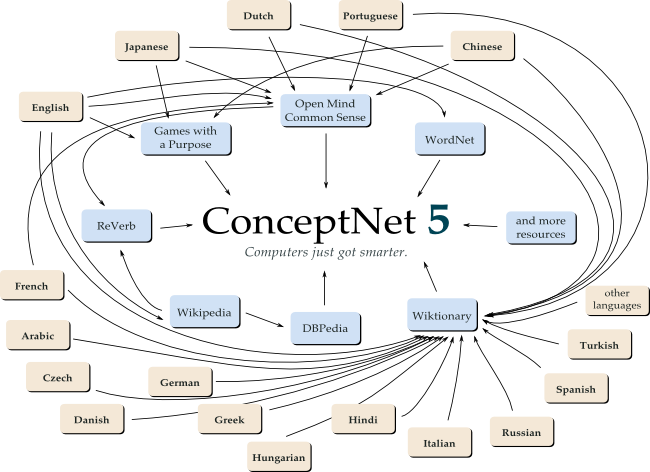
From the second we are born we are collecting a wealth of knowledge about the world. This knowledge is accumulated and interrelated inside our brains and it represents what we know. If we could export this knowledge and give it to a computer, it would look like ConceptNet. ConceptNet is a semantic network that…

…is built from nodes representing concepts, in the form of words or short phrases of natural language, and labeled relationships between them. These are the kinds of things computers need to know to search for information better, answer questions, and understand people’s goals.

Continue reading

Tagged , , , , , , , , ,