

Michael Hunger imported the Hubway Challenge dataset into a Neo4j graph database, and made it available for us to play with.
Continue reading
Michael Hunger imported the Hubway Challenge dataset into a Neo4j graph database, and made it available for us to play with.
Continue reading
Allison Sparrow shared a link to Patentula, a company interested in finding better ways to explore patent data and hunt patent trolls. What caught my attention is this quote from the video below:
What we tried to do with it, is bypass any sort of keyword processing in order to find similar patents. The reason we’ve done this is to avoid the problems encountered by other systems that rely on natural language processing or semantic analysis simply because patents are built to avoid detection by similar keywords…we use network topology (specifically citation network topology) to mine the US patent database in order to predict similar documents.

Social applications and Graph Databases go together like peanut butter and jelly. I’m going to walk you through the steps of building an application that connects to Facebook, pulls your friends and likes data and visualizes it. I plan on making a video of me coding it one line at a time, but for now let’s just focus on the main elements.
Continue reading
A tweet from RiparianData caught my eye the other day:
https://twitter.com/RiparianData/status/222319315800698880
I built getvouched.com with this idea of “expert and expertise discovery” using skill based vouching adjusted by the distance from searcher to target as a way to find rank. So I dug in and found out that Human-computer Information Retrieval (HCIR) combines research from the fields of human-computer interaction (HCI) and information retrieval (IR), placing an emphasis on human involvement in search activities.
The HCIR challenge for this years symposium includes “hiring,” “assembling a conference program,” and “finding people to deliver patent research or expert testimony” as summarized by Patrick Durusau.
Continue reading
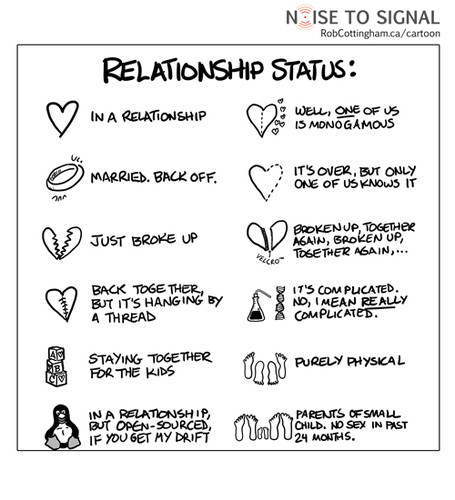
When working with relational databases, the join tables are sometimes treated as second class citizens. If they are lucky, they’ll get some additional fields, but are often just placeholder tables connecting your main object tables together. It leads you to think about objects first, and relationships second. With graphs, you will want to switch up your thinking. You want to start thinking about how things are connected. Think about the different ways things are connected. Two people can be friends, co-workers, and neighbors all at the same time.
Continue reading

On his blog Marko A. Rodriguez showed us how to make A Graph-Based Movie Recommender Engine with Gremlin and Neo4j.
In this two part series, we are going to take his work from the Gremlin shell and put it on the web using the Heroku Neo4j add-on and altering the Neovigator project for our use case. Heroku has a great article on how to get an example Neo4j application up and running on their Dev Center and Michael Hunger shows you how to add JRuby extensions and provides sample code using the Neo4j.rb Gem by Andreas Ronge.
We are going to follow their recipe, but we are going to add a little spice. Instead of creating a small 2 node, 1 relationship graph, I am going to show you how to leverage the power of Gremlin and Groovy to build a much larger graph from a set of files.
Let’s start by cloning the Neoflix Sinatra application, and instead of installing and starting Neo4j locally, we are going to create a Heroku application, and add Neo4j.
git clone git@github.com:maxdemarzi/neoflix.git
cd neoflix
bundle install
heroku apps:create neoflix --stack cedar
heroku addons:add neo4j
git push heroku master
 Max De Marzi